
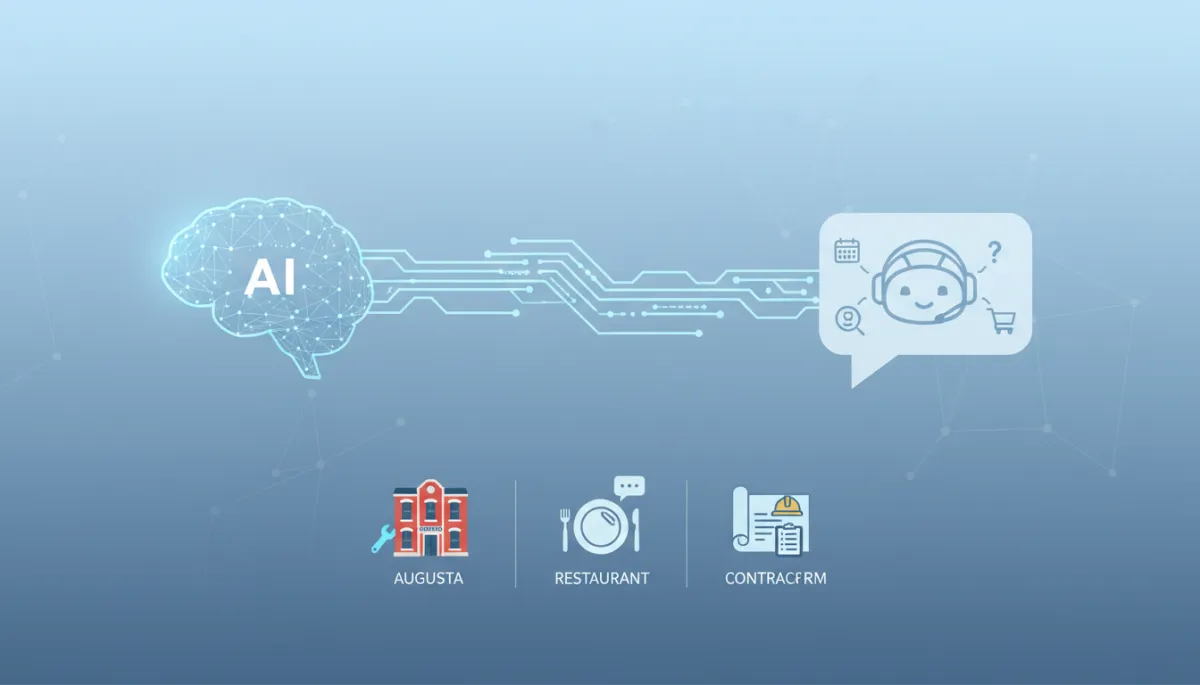
AI Chatbots in Local Business Marketing
AI Chatbots, Small Business Automation, Local Marketing
What AI Chatbots Actually Do (and How They Fit Into Local Business Marketing)
Many Augusta-area small business owners have seen clunky, frustrating chatbots in the past, so hesitation about using one on your own website is completely understandable. This article explains what modern AI chatbots really do, where they fit in a local marketing system, and how they can support—not replace—great customer service for businesses and agencies.
Why Today’s AI Chatbots Are Different from the “Old” Bots
If your first experience with a chatbot was a rigid pop-up that could only answer three canned questions—and usually got those wrong—it is no surprise you might be skeptical. Early bots were basically decision trees: click this button, go to this answer. When a customer asked anything slightly different, the bot stalled or looped them in circles.
Modern AI chatbots, powered by natural language models, work very differently. They can understand a wide range of questions in everyday language, pull from approved information about your business, and respond in a conversational, human-like way. For Augusta small businesses, that means a chatbot can act as a digital front desk that helps prospects and customers 24/7, even when your team is busy, on job sites, or closed for the night.
Core AI Chatbot Benefits for Local Businesses and Agencies
When used correctly, AI chatbots deliver specific, measurable AI Chatbot Benefits that support your local marketing and sales efforts. They are not magic, but they can handle a surprising amount of routine work that currently falls on your front desk, office manager, or even the owner.
Answer common questions instantly. Hours, location, service areas, pricing ranges, how to book, what to bring—these are questions your team answers over and over. A chatbot can respond immediately, any time of day, using information you approve in advance.
Collect lead information automatically. Instead of hoping visitors find your contact form, the chatbot can ask for a name, phone number, email, and short description of their need, then pass that information to your CRM, inbox, or sales team for follow-up.
Guide visitors to the right service. Many local businesses offer multiple services. The bot can ask a few clarifying questions and direct people to the page, offer, or team member that fits their situation best, reducing confusion and drop-off.
Help schedule appointments. Integrated with a booking tool or shared calendar, the chatbot can propose open time slots, capture basic details, and confirm appointments—especially useful for service-based businesses that rely on scheduled visits or consultations.
Qualify prospects before your team engages. By asking a few key questions—budget range, project timeline, type of issue—the bot can flag high-value leads for faster follow-up and filter out inquiries that clearly are not a fit, improving your team’s efficiency.
Prevent visitors from leaving without action. A chatbot can proactively greet visitors who appear stuck or about to leave, offer help, and invite them to ask a question or request a quote—turning more anonymous traffic into actual conversations.
All of these capabilities add up to meaningful Small Business Automation: repetitive, low-value tasks are handled reliably by the chatbot, while your team focuses on work that truly requires human judgment and personal attention.
Practical Examples for Augusta Small Businesses
To see how this works in the real world, consider a few familiar types of Augusta-area businesses and how an AI chatbot could plug into their marketing and customer experience.
Plumbing or HVAC Company
A local plumbing company often gets calls at inconvenient times: evenings, weekends, or when technicians are already on another job. A chatbot on the website can:
Ask whether the issue is an emergency or routine maintenance.
Collect the customer’s address, best contact number, and brief description of the problem.
Explain service areas, typical response times, and what to do while they wait (for example, how to shut off water).
The information goes directly to the on-call technician or office inbox, so your team starts each conversation already prepared, and you capture more after-hours leads that might otherwise call a competitor.
Local Restaurant or Café
For a restaurant in downtown Augusta, a chatbot can become an efficient front line for common customer questions:
Answering questions about hours, parking, dress code, and whether reservations are required.
Sharing links to menus, daily specials, and online ordering platforms.
Collecting information for group bookings or private events and sending it to your event manager.
Instead of staff answering the same questions by phone during busy dinner service, the chatbot provides clear, consistent responses and captures contact details from interested guests for future promotions or email campaigns.
When chatbots handle routine questions, staff gain time for higher-value customer interactions.
Contractor or Professional Service Firm
Contractors, law firms, accounting practices, and marketing agencies in the Augusta area often rely on consultations and estimates. An AI chatbot can:
Ask qualifying questions (project type, timeline, budget range, location) before scheduling a call.
Explain which services you do—and do not—offer, reducing unqualified inquiries.
Share next steps, such as what documents to prepare or how to upload project photos before the consultation.
For agencies serving multiple local clients, chatbots can also be packaged as a service: you manage setup, messaging, and integration, giving your clients a practical Small Business Automation tool that supports campaigns you are already running for them.
Common Chatbot Misconceptions to Avoid
Despite the clear AI Chatbot Benefits, there are still several Chatbot Misconceptions that can lead to poor decisions or unrealistic expectations. Clarifying these up front helps you design a chatbot that genuinely supports your business.
Misconception 1: “The chatbot will replace my staff.” In reality, the best chatbots act as assistants. They handle repetitive, predictable interactions so your team can focus on complex issues and high-value relationships. They are support tools, not substitutes for human service.
Misconception 2: “It will solve every customer problem.” Even the most advanced chatbot cannot handle every scenario. It should know when to escalate to a real person, provide a phone number, or invite the visitor to schedule a call for more complex questions.
Misconception 3: “Once it’s installed, I never have to touch it.” Effective chatbots require ongoing tuning. Reviewing conversations, updating answers, and refining questions over time ensures the bot stays aligned with your services, policies, and marketing messages.
What Chatbots Should Not Do in Your Business
To get the most from Small Business Automation, it is just as important to define what your chatbot should not handle. Clear boundaries protect your brand and your customers’ experience.
Do not let it handle sensitive or high-risk issues. Billing disputes, legal questions, medical concerns, and safety issues should always be routed to a trained human as quickly as possible.
Do not pretend it is a person. Be transparent that visitors are interacting with a virtual assistant. Customers appreciate honesty, and it reduces frustration when the bot reaches its limits and needs to hand off the conversation.
Do not hide your real contact options. A chatbot should make it easier—not harder—for visitors to call, email, or request a callback. It is there to support great customer service, not block it.
📌 Key Takeaway: Think of your chatbot as a digital front desk that greets, guides, and gathers information—then hands off smoothly when a human needs to step in.
Questions to Ask Before Adding an AI Chatbot
Before you add a chatbot to your Augusta business or to a client’s site, take a step back and think strategically. These practical questions will help you decide if a chatbot is a smart move and how it should be configured.
What questions do customers ask most often? Make a list from phone calls, emails, and in-person visits. If the same questions appear again and again, they are ideal candidates for chatbot responses.
How many leads or inquiries come in after hours? If you regularly miss calls in the evening or on weekends, a chatbot can capture contact information and context so you can follow up promptly the next business day.
What information do you need to follow up effectively? Decide which fields are essential—name, phone, email, service type, location, budget range—so the chatbot can collect them in a natural conversation without overwhelming the visitor.
Who will own and review chatbot conversations? Assign a person or team to monitor transcripts, adjust responses, and ensure the bot reflects current services, pricing, and policies.
How will the chatbot integrate with your existing systems? Consider whether leads should go to email, a CRM, a booking tool, or a shared spreadsheet so nothing falls through the cracks.
Seeing AI Chatbots as Your Digital Front Desk
For Augusta small businesses and the agencies that support them, AI chatbots are most powerful when you stop thinking of them as a trendy gadget and start viewing them as a practical piece of your marketing and customer service system. They greet website visitors, answer routine questions, collect lead information, guide people to the right service, and help schedule appointments—all quietly working in the background while you run your business.
They will not replace your best employees, and they should never handle your most sensitive conversations. But as a digital front desk that works when you are busy, on the road, closed, or simply unavailable, a well-built chatbot can capture opportunities you are currently missing and create a smoother experience for the customers you serve every day.
If you have been turned off by bad chatbot experiences in the past, it may be time to take another look. With clear goals, realistic expectations, and thoughtful setup, modern AI chatbots can become a reliable partner in your marketing system—helping your local business stay responsive and professional, even when you cannot be at the front desk yourself.