

Understanding Augusta's Local Customer Journey
Local Marketing, Customer Journey, Augusta Small Business
Why One Ad Is No Longer Enough: Understanding Today’s Local Customer Journey in Augusta
In Augusta today, most customers do not pick a business after seeing one ad, one Facebook post, or visiting one website. They research first. They may notice a social post, check Google reviews, click through to your website, compare you with two or three competitors, ask friends for opinions, look at photos, and only then decide who feels most trustworthy and easiest to work with. For local business owners, this “many touchpoints” journey is now the rule, not the exception.
How the Way Customers Choose Local Businesses Has Changed
Not long ago, a strong newspaper ad, a billboard on Washington Road, or a word-of-mouth referral might have been enough to win a new customer in Augusta. Today, nearly every local purchase begins online, usually on a smartphone. Customers expect fast information, clear proof, and multiple signs that a business is reliable before they ever pick up the phone or walk through the door. Research shows that by the time many people contact a business, they have already completed 60–70% of their decision-making based on what they saw online first (thelocalaim.com).
Discovery is also shifting. Google Search and Google Maps are still dominant, but social platforms like Facebook and Instagram are gaining ground. On top of that, more consumers are starting to use AI tools, like ChatGPT, to find and compare local businesses, which means your online information needs to be accurate, consistent, and easy for both people and technology to understand. At the same time, traditional directories and print ads influence fewer decisions every year. The bottom line: customers now choose based on a complete picture, not a single message.
The Modern Customer Journey in Plain English
To make smarter marketing decisions, it helps to think about your customer’s experience as a journey with clear stages. For Augusta-area small businesses, a practical way to break it down is into seven steps: discovery, research, comparison, trust-building, contact, follow-up, and decision. Each stage is a chance to win or lose that customer.
1. Discovery: How People First Hear About You
Discovery is the moment a potential customer first becomes aware that your business exists. In Augusta, that can happen through:
A Google search like “Augusta plumber near me” or “best brunch in Augusta”
A Google Maps result when they are already out and about
A Facebook or Instagram post shared by a friend
A recommendation in a local group, church circle, or neighborhood chat
At this stage, your Google Business Profile is often the first thing they see. Is your name, address, phone number, and business category correct? Are your hours up to date? Do you have recent photos? If not, you may never move to the next stage with that customer—they will simply choose another listing that looks more complete and current.
2. Research: Getting the Basics and First Impressions
Once they discover you, customers begin to gather basic information. They scan your reviews, click your website, and look at your Facebook page. This is where website clarity and helpful content become critical. Within seconds, they want answers to questions like:
What exactly do you offer?
Do you serve my part of Augusta or North Augusta?
What do your prices or starting rates look like?
Are you open now, and how do I contact you?
A cluttered, confusing website or an outdated Facebook page makes research harder and pushes people toward your competitors. Clear service descriptions, simple navigation, and recent posts or photos all tell customers, “We are active, we are organized, and we are ready to help.”
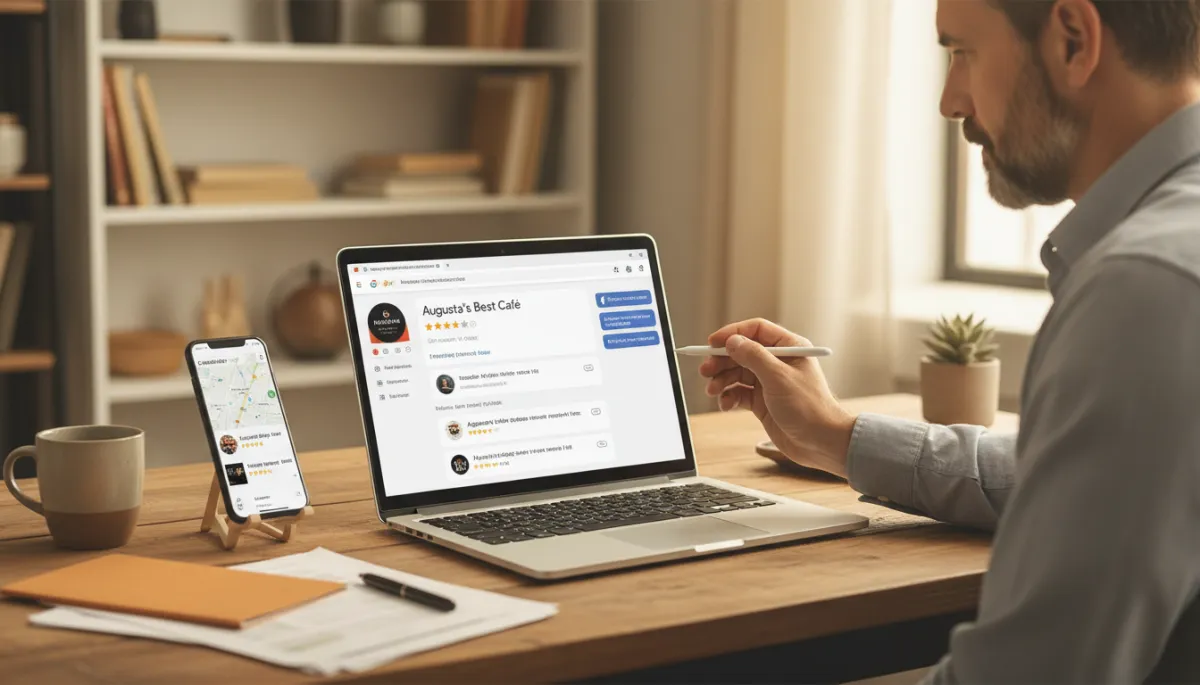
Seeing your customer journey as connected touchpoints helps you fix the right gaps.
3. Comparison: Stacking You Against Local Competitors
Rarely does a customer look at only one business. They open several Google tabs. They scan reviews side by side. They compare photos, prices, and response times. In fact, the top 20% of local businesses now capture the majority of search visibility because they consistently manage these touchpoints better (thelocalaim.com).
During comparison, your online reviews, photos, and local reputation carry enormous weight. Customers look at:
Star rating and number of reviews on Google
How recent those reviews are—many people now trust reviews from the last 30 days far more than older ones
Your responses to both positive and negative reviews
If your competitor has 150 recent reviews and you have 12, or if they reply kindly to every review while your profile is silent, many customers will quietly choose them—without ever telling you why. Comparison is where a lot of sales are lost, long before the phone rings.
4. Trust-Building: Proving You Are the Safe, Smart Choice
Once a customer has a shortlist, they look for reasons to trust one business more than another. This is where helpful content, Facebook presence, and consistent local reputation all work together. Short videos, before-and-after photos, staff introductions, and quick tips about common problems show that you know your work and care about your customers. Industry research shows that “proof-first” marketing—clear pricing, up-to-date hours, real photos, and honest explanations—has become a major driver of trust (townsquareinteractive.com).
For example, an Augusta lawn care company that posts seasonal tips, shows photos from local neighborhoods, and highlights community involvement will often feel more trustworthy than a competitor with a generic website and no local presence. Trust-building content does not have to be fancy; it has to be real, recent, and relevant to the questions your customers are already asking.
5. Contact: When Speed and Professionalism Matter Most
After all that research, a potential customer finally reaches out—by phone call, Facebook message, website form, or text. This is the moment many businesses think of as the “start” of the sales process, but in reality, the customer has already done most of the work. Your job now is not to sell hard, but to confirm the positive impression they already have.
Here, response time can make or break the deal. Customers have grown used to fast replies, and slow follow-up suggests disorganization or lack of interest. Simple systems—such as email notifications for form submissions, Facebook Messenger alerts, or even basic autoresponders that promise a call-back within a set time—help reassure people that you are on top of things. A friendly, professional tone on the phone or in messages reinforces the trust you built online.
6. Follow-Up: The Overlooked Stage That Wins Extra Business
Many Augusta businesses lose customers at the follow-up stage without realizing it. Someone fills out a form, sends a Facebook message, or asks for a quote—and then hears nothing for days. By then, they have already moved on. Effective follow-up is now a critical touchpoint in the modern journey.
Good follow-up means:
Confirming you received their question or request quickly
Providing a clear next step—quote, appointment, or visit
Checking back if you have not heard from them, in a respectful way
This stage is also a chance to share additional helpful content, such as a short guide, FAQ page, or video that answers common questions. Doing so positions you as a partner, not just a vendor, and nudges the customer closer to choosing you.
7. Decision: Turning a Researcher into a Paying Customer
Finally, the customer decides. At this point, they are weighing everything they have seen and felt along the journey: your Google Business Profile, your reviews and responses, your website clarity, your Facebook presence, your speed of reply, the tone of your communication, and what their friends or neighbors have said about you. If you have been consistent across these touchpoints, the decision often feels easy for them—and for you, it feels like “a good lead” rather than a hard sale.
Remember that the journey does not truly end here. After the job is done or the meal is served, your next step should be to invite a review, stay connected on social media, or add them to a permission-based email list. This keeps your local reputation growing and feeds the top of the journey for the next wave of customers.
Key Touchpoints Augusta Small Businesses Should Focus On
When you look at the whole journey, it can feel overwhelming. The good news is that you do not have to fix everything at once. Start by strengthening the touchpoints that influence the most stages:
Google Business Profile: Make sure your listing is complete, accurate, and filled with recent photos. This directly affects discovery, research, and comparison.
Online Reviews: Ask happy customers to leave reviews and respond to every review, good or bad. This builds trust and helps you stand out in comparison.
Website Clarity: Make it easy to understand what you do, where you work, what it costs, and how to contact you. Clear beats clever every time.
Facebook Presence: Post occasionally with real photos, updates, and tips. Customers look here as a quick “is this business active?” check.
Response Time: Put simple systems in place so calls, messages, and forms get a quick reply. Speed signals professionalism and care.
Helpful Content: Share answers to common questions in plain language—on your website, social media, and in follow-up messages. This accelerates trust-building.
Local Reputation: Stay visible in the community through partnerships, sponsorships, and consistently good service. Online and offline reputation work together.
Follow-Up: Treat every inquiry as the start of a relationship, not a one-time transaction. Thoughtful follow-up can turn “maybe later” into “yes.”
Bringing It All Together for Your Augusta Business
Today’s customers rarely make decisions from one ad, one post, or one website visit. They move through a journey—discovery, research, comparison, trust-building, contact, follow-up, and decision—using multiple devices and platforms along the way. For Augusta-area small businesses, the companies that will grow in the coming years are those that see this journey clearly and intentionally improve the touchpoints that shape it.
You do not need a huge marketing budget to compete. You need clarity, consistency, and a plan. Start with your Google Business Profile and reviews. Make your website simple and helpful. Keep your Facebook page current. Respond quickly and follow up thoughtfully. When you do, you will not just look better online—you will feel more confident that, when local customers start their research, your business will still be the one they choose at the end of the journey.